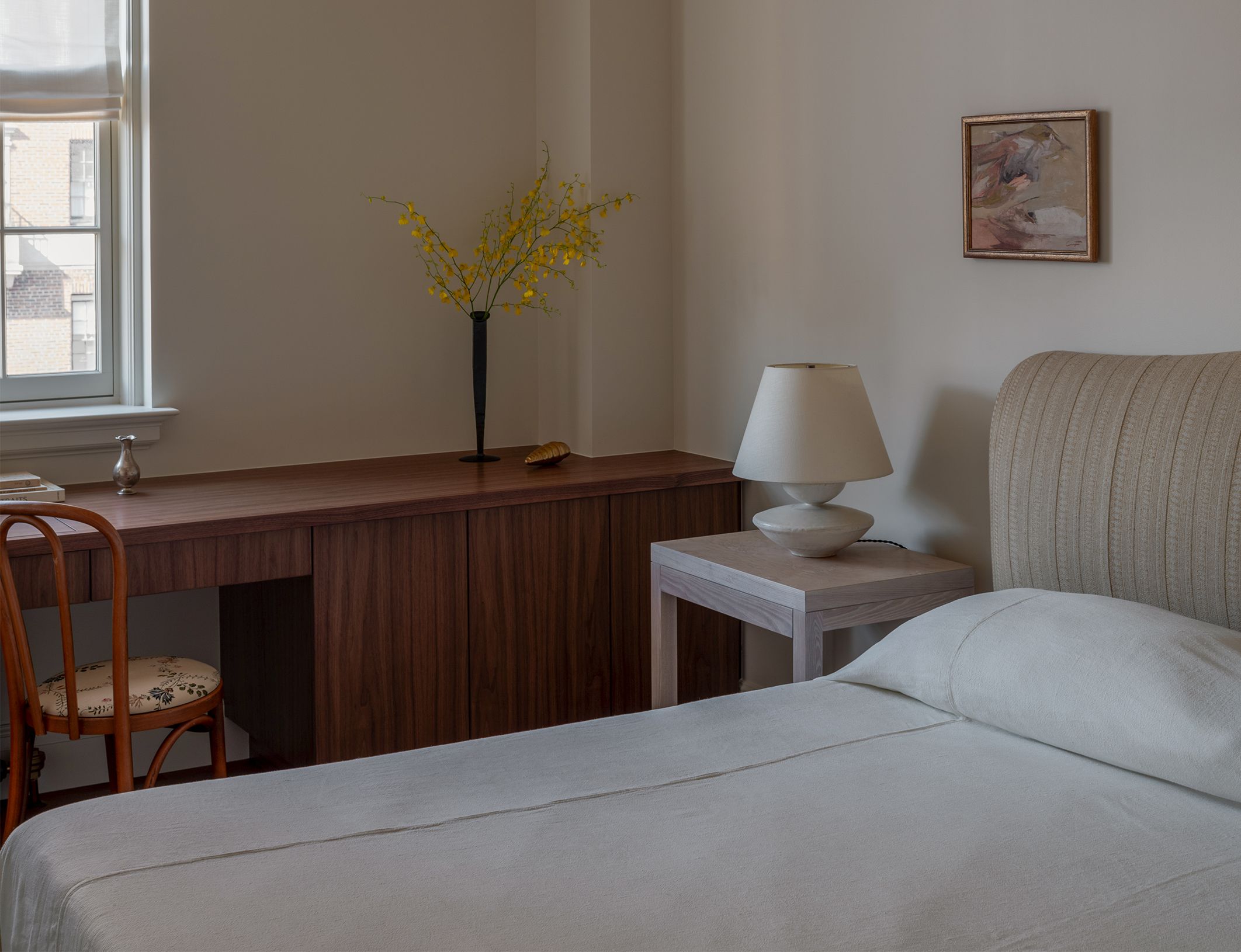
Fifth Avenue Apartment


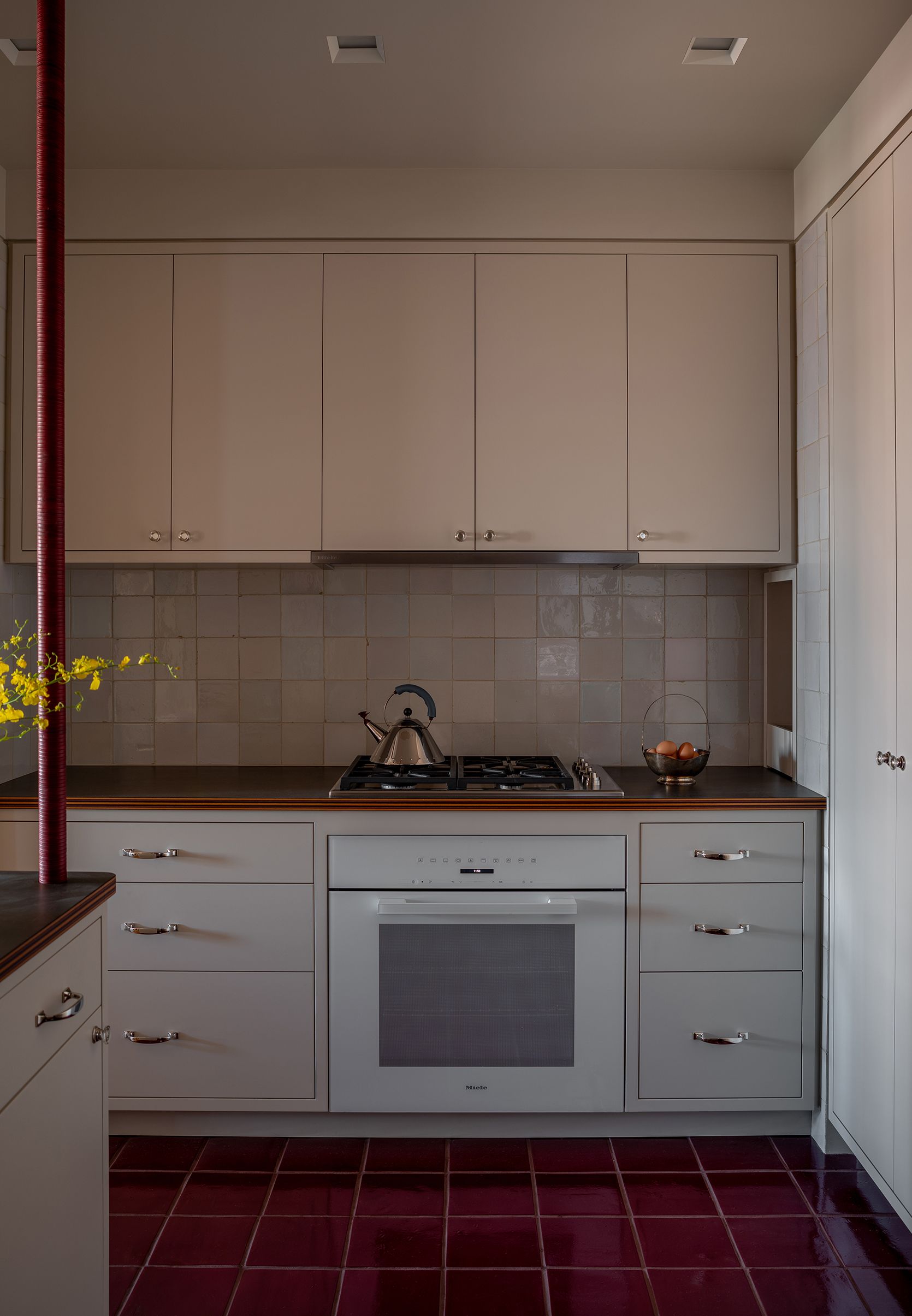
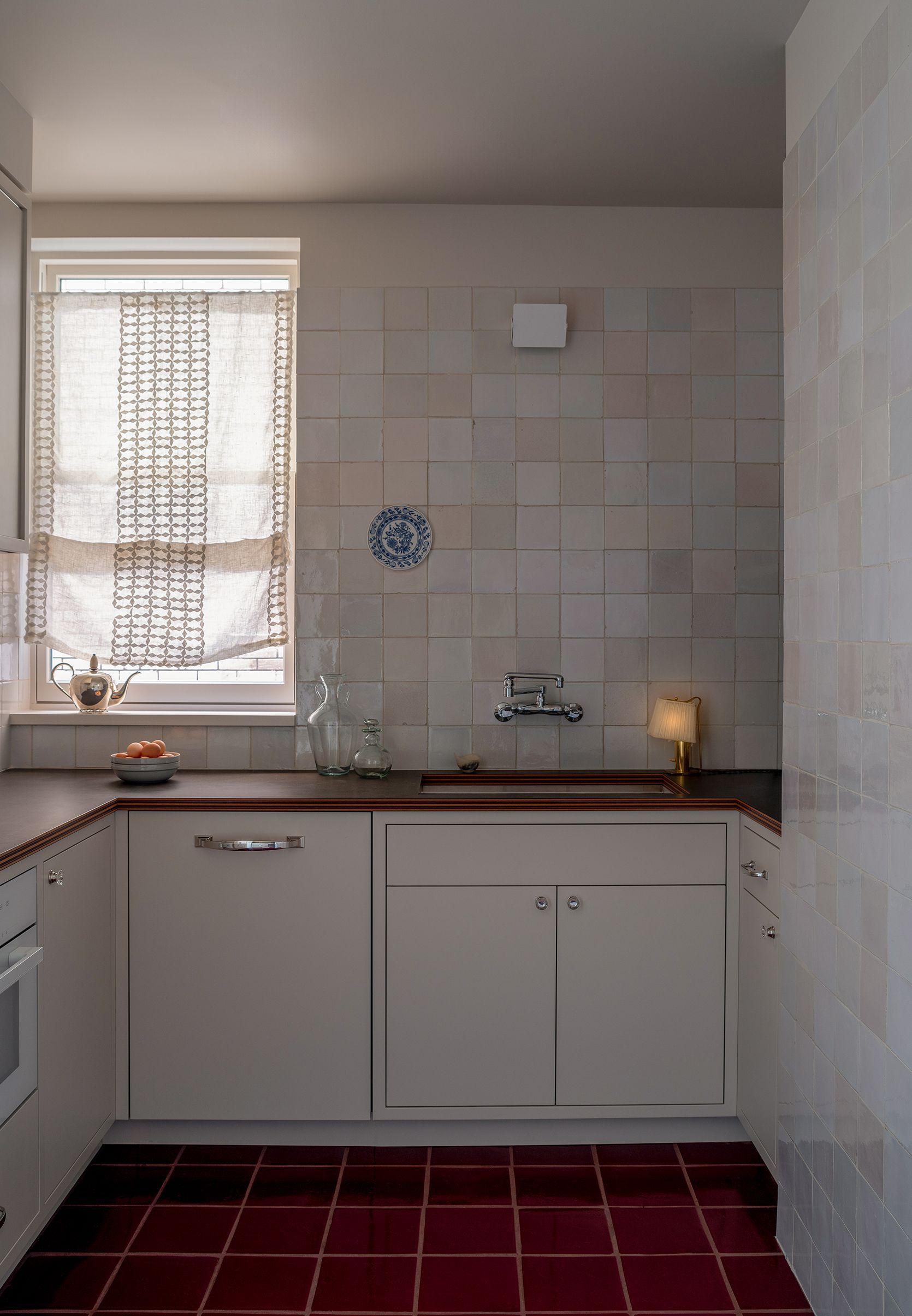
This 1922 residence on lower Fifth Avenue tells a story of unification—two adjacent apartments that were always separate, one with original ornamental detail intact, the other stripped of its heritage over time. Redundant entries and a disjointed layout needed rethinking to create a cohesive pied-à-terre for a couple to host their nearby family.
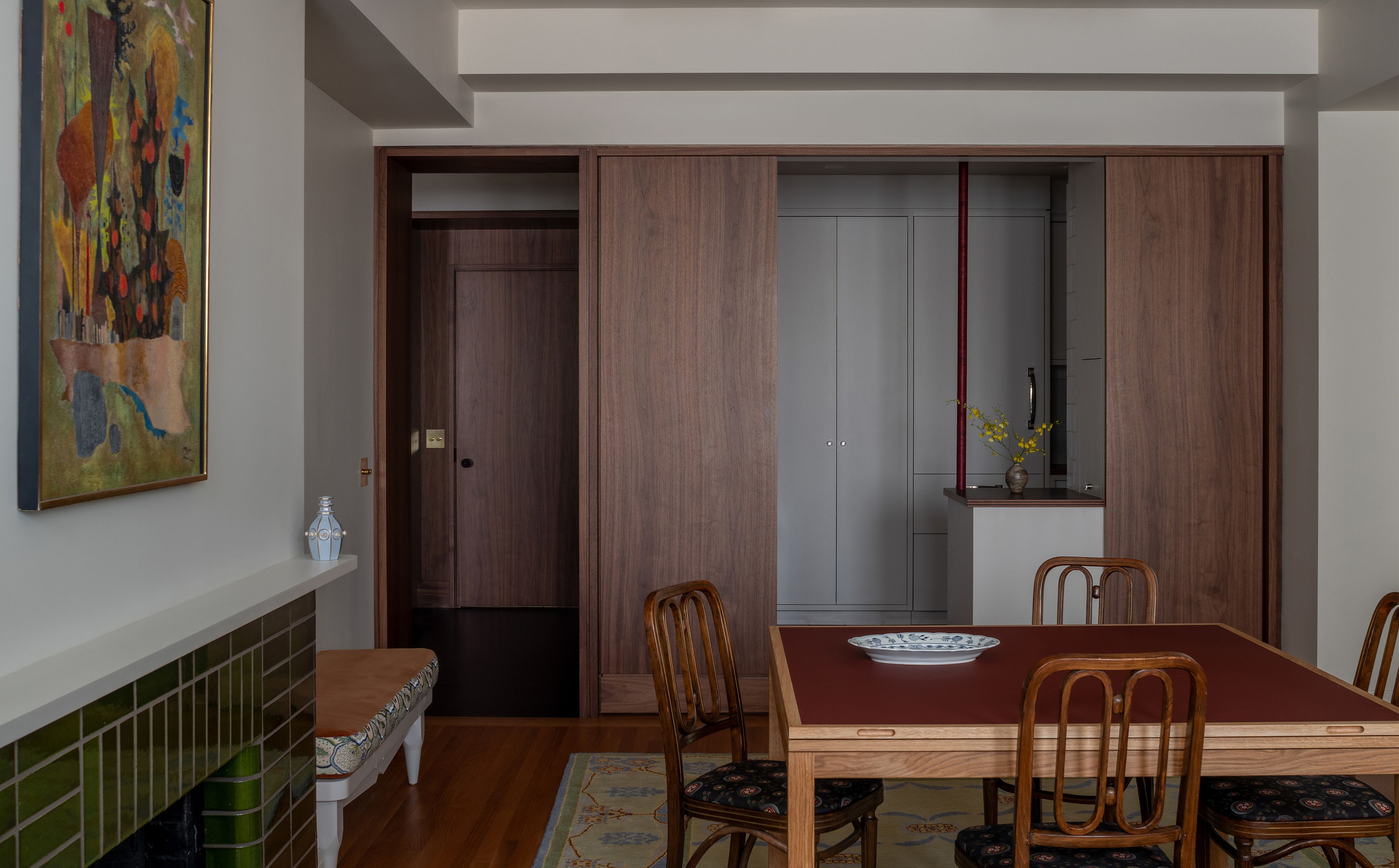
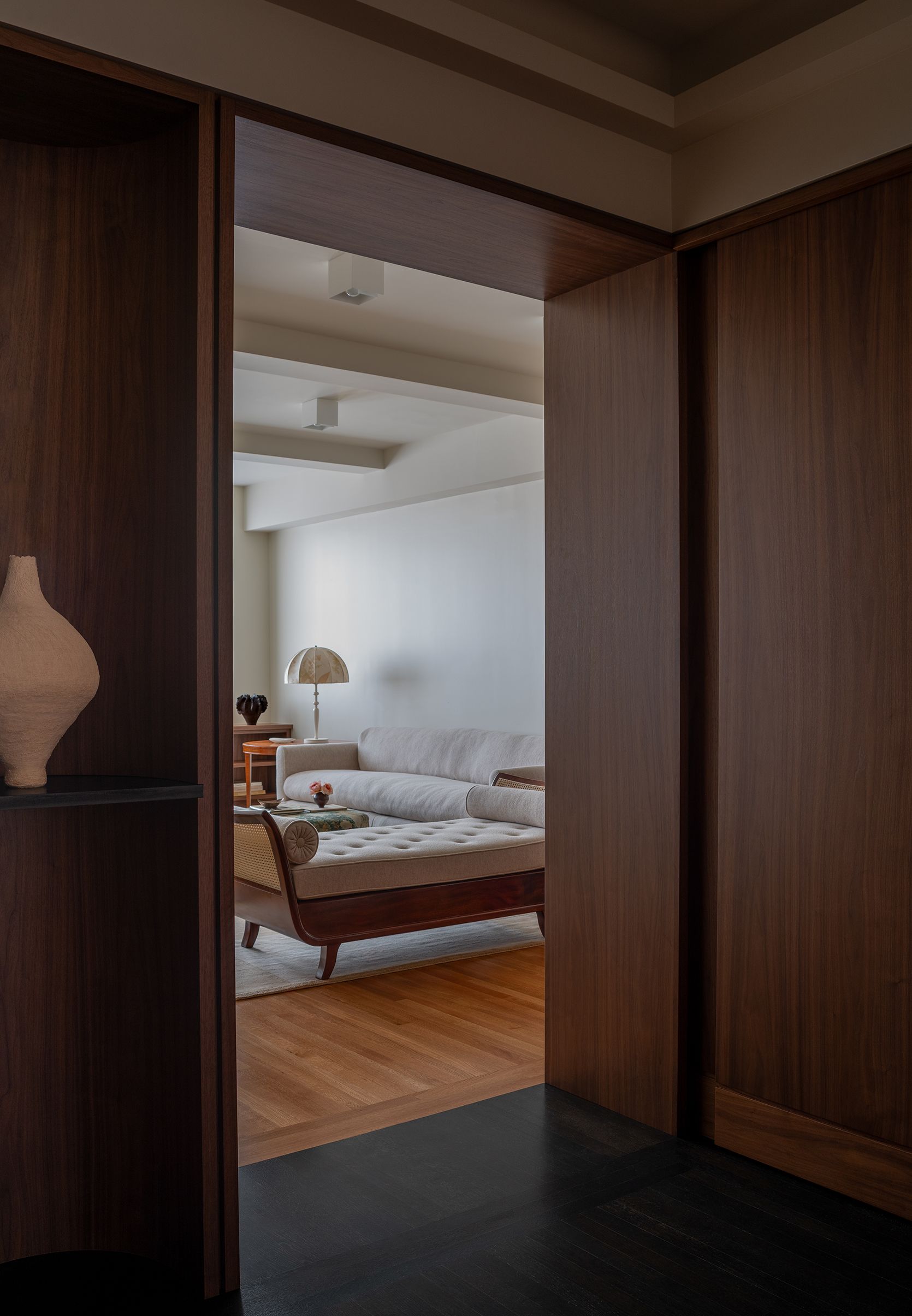
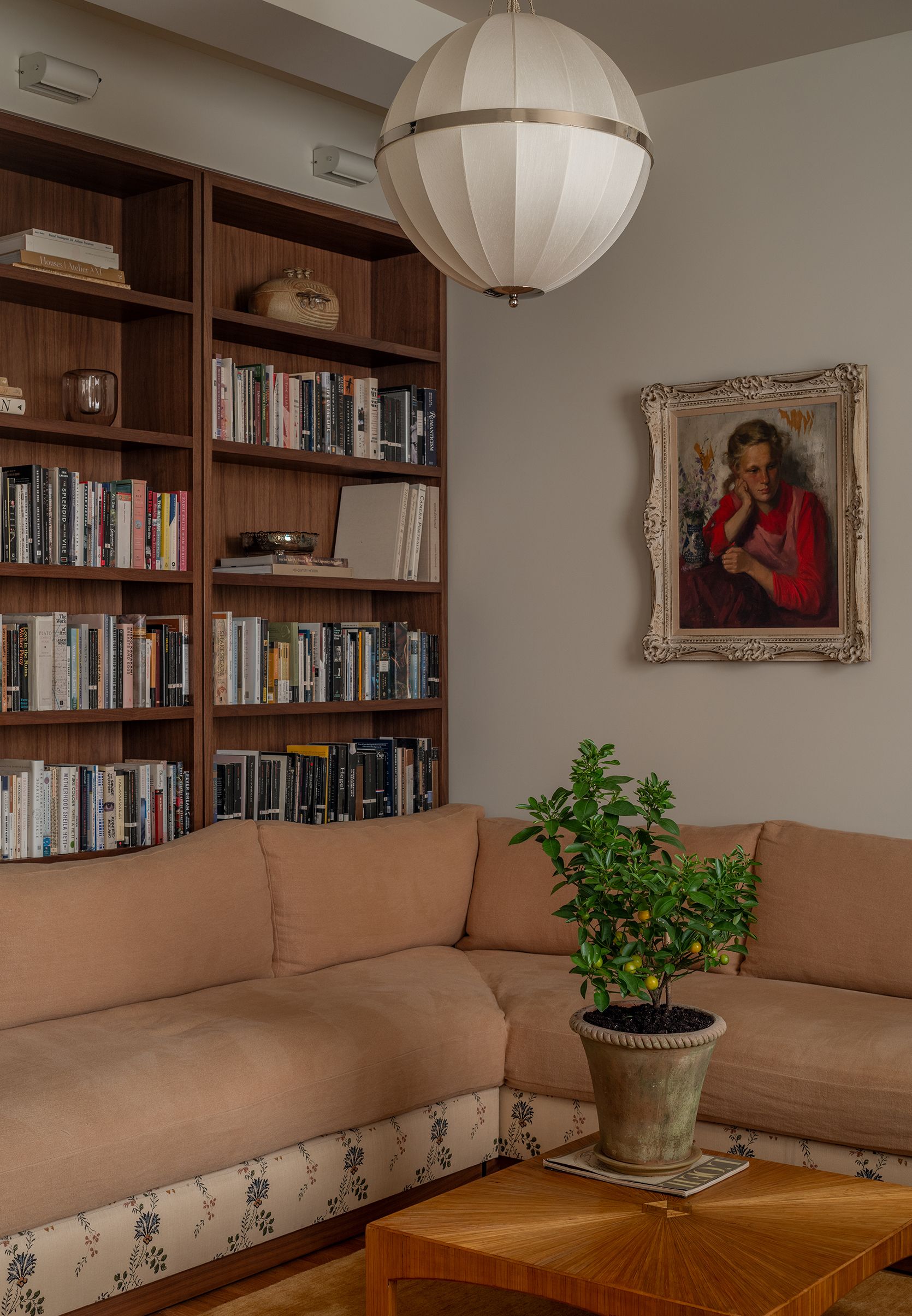
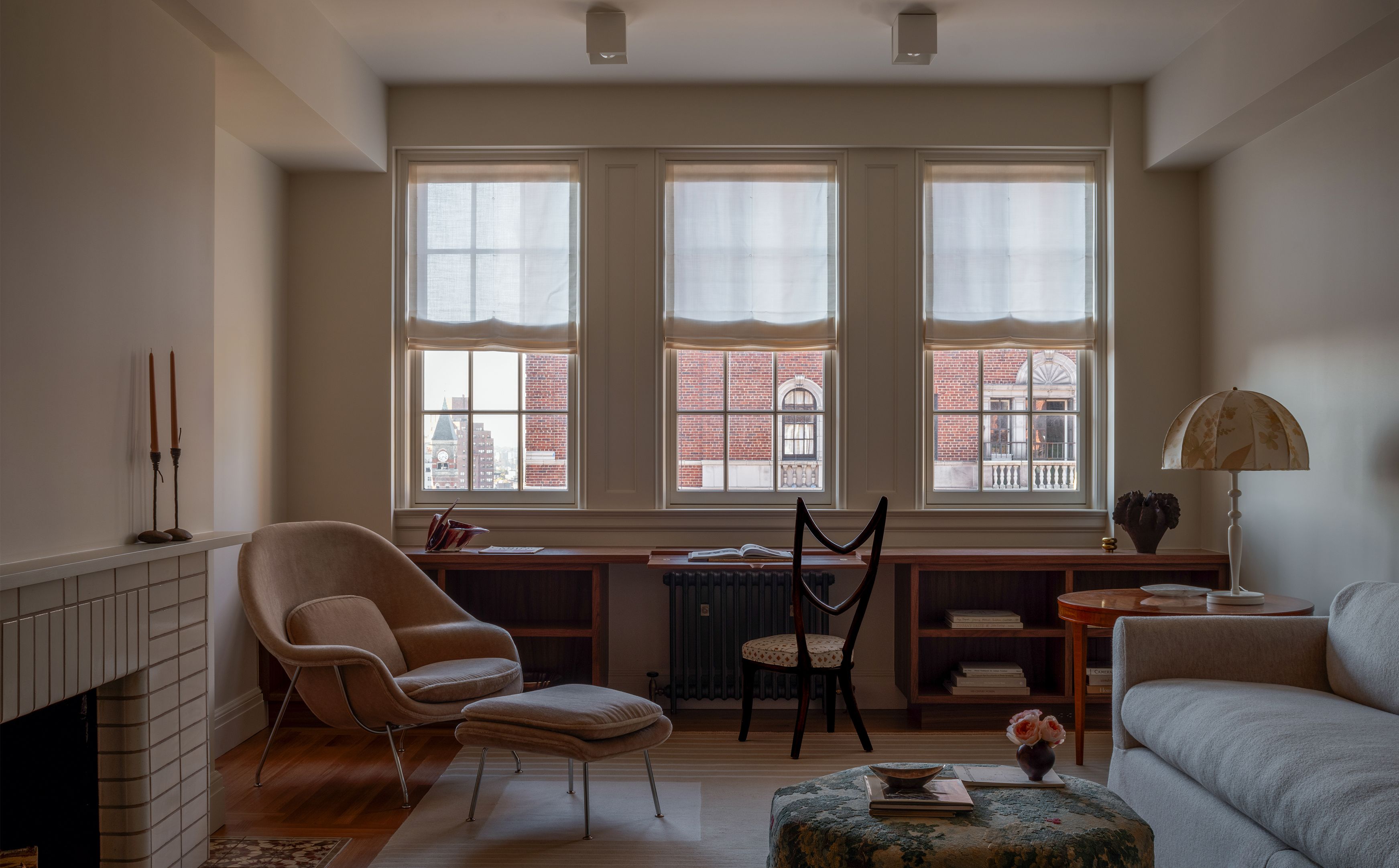
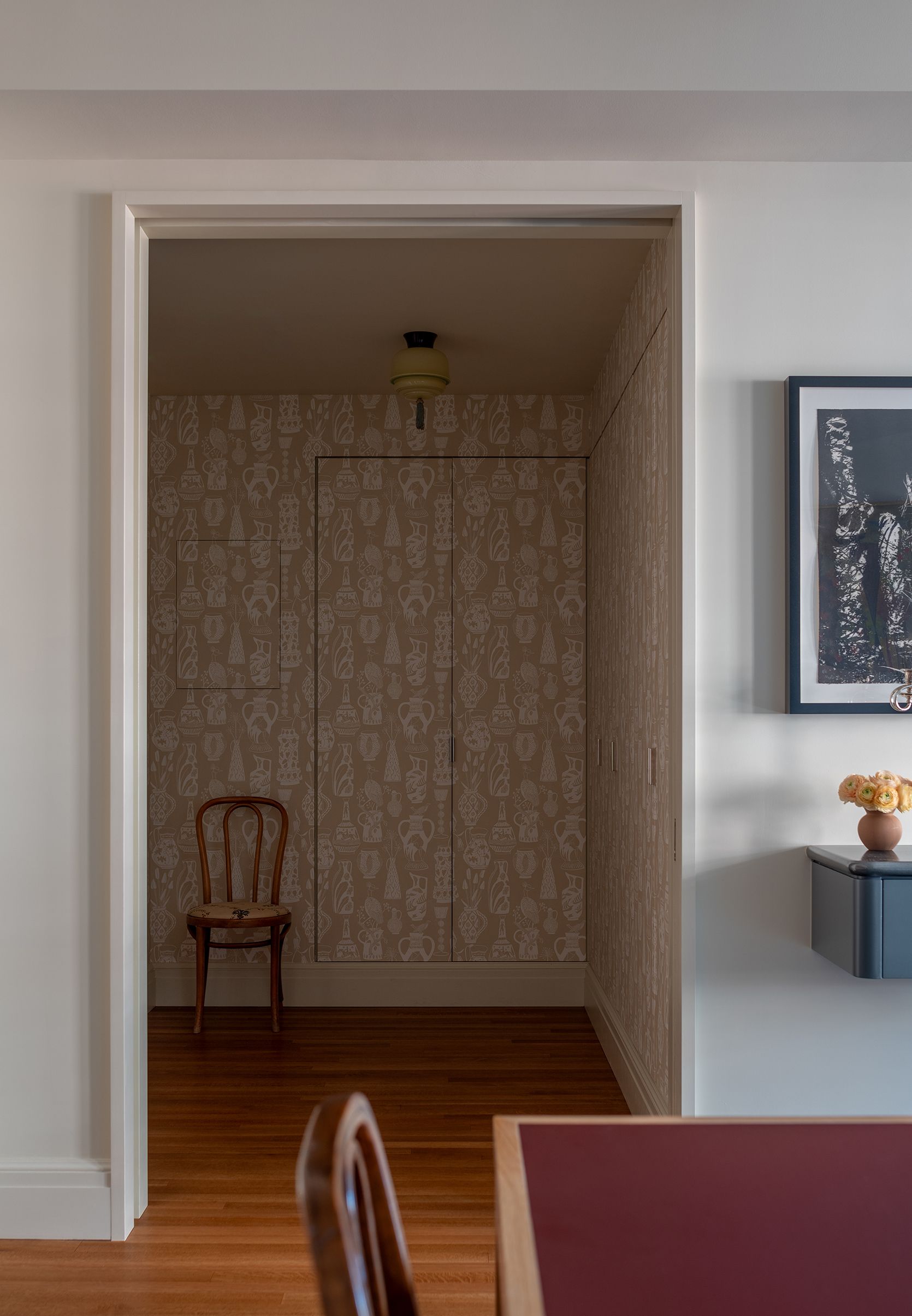
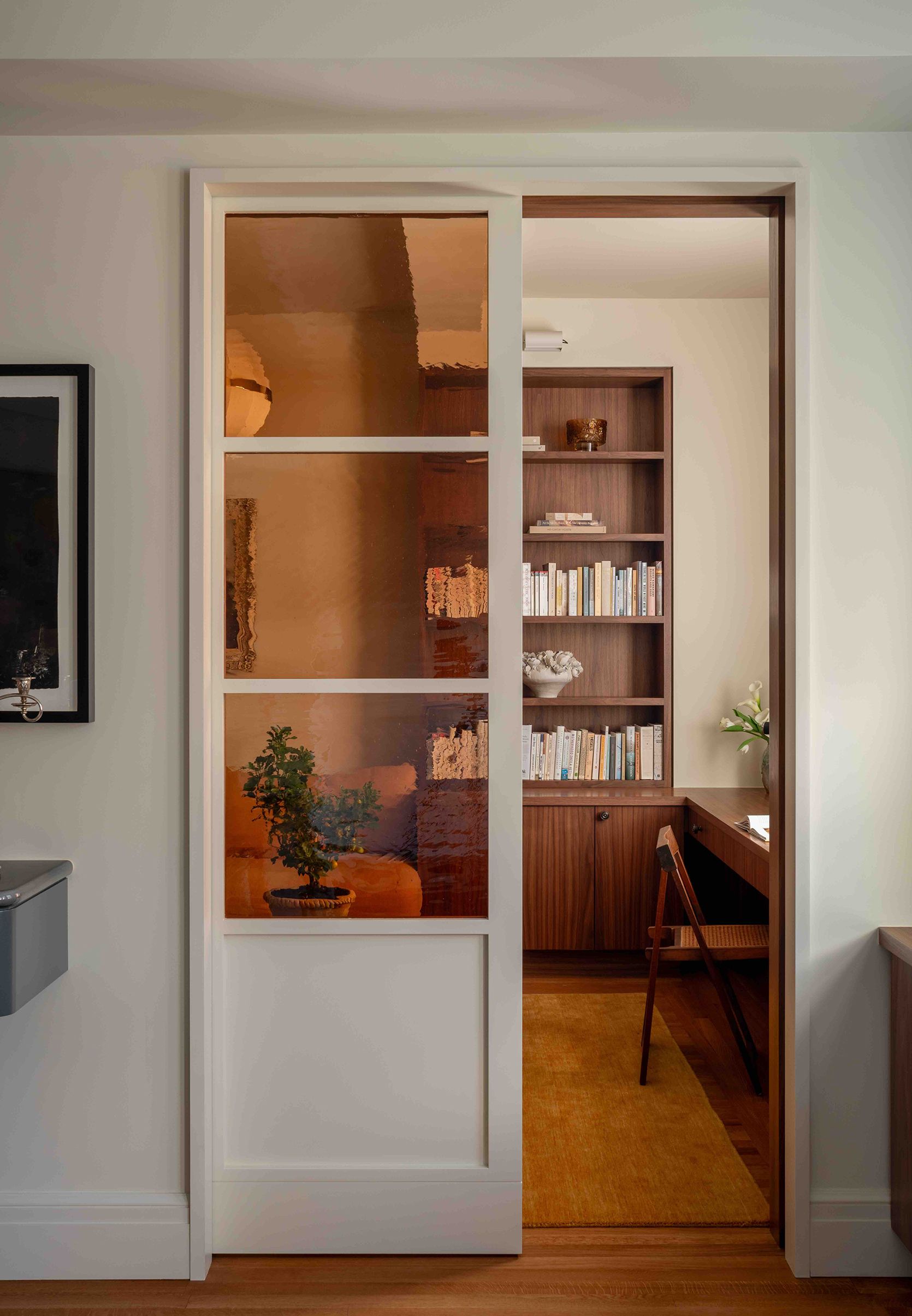
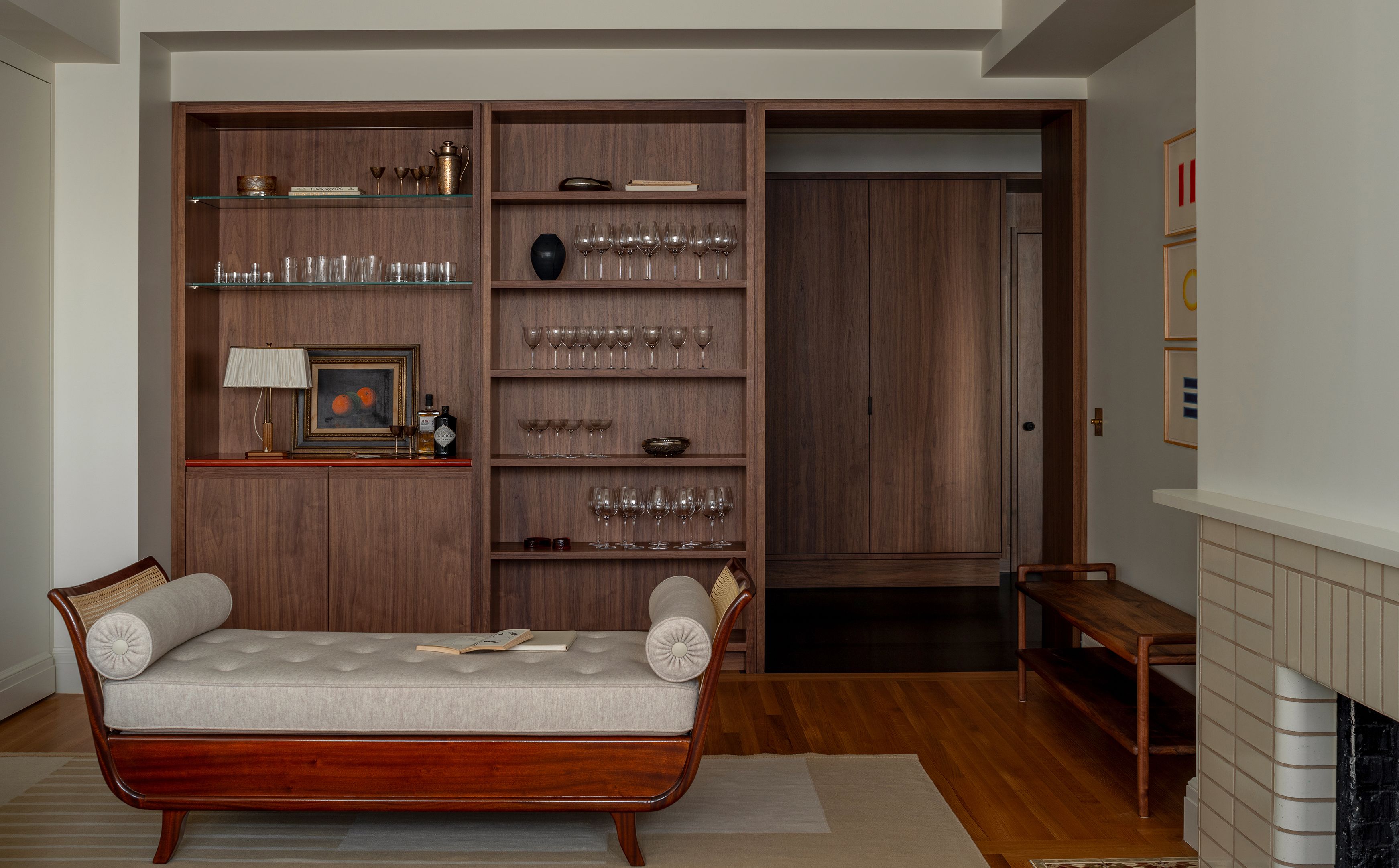
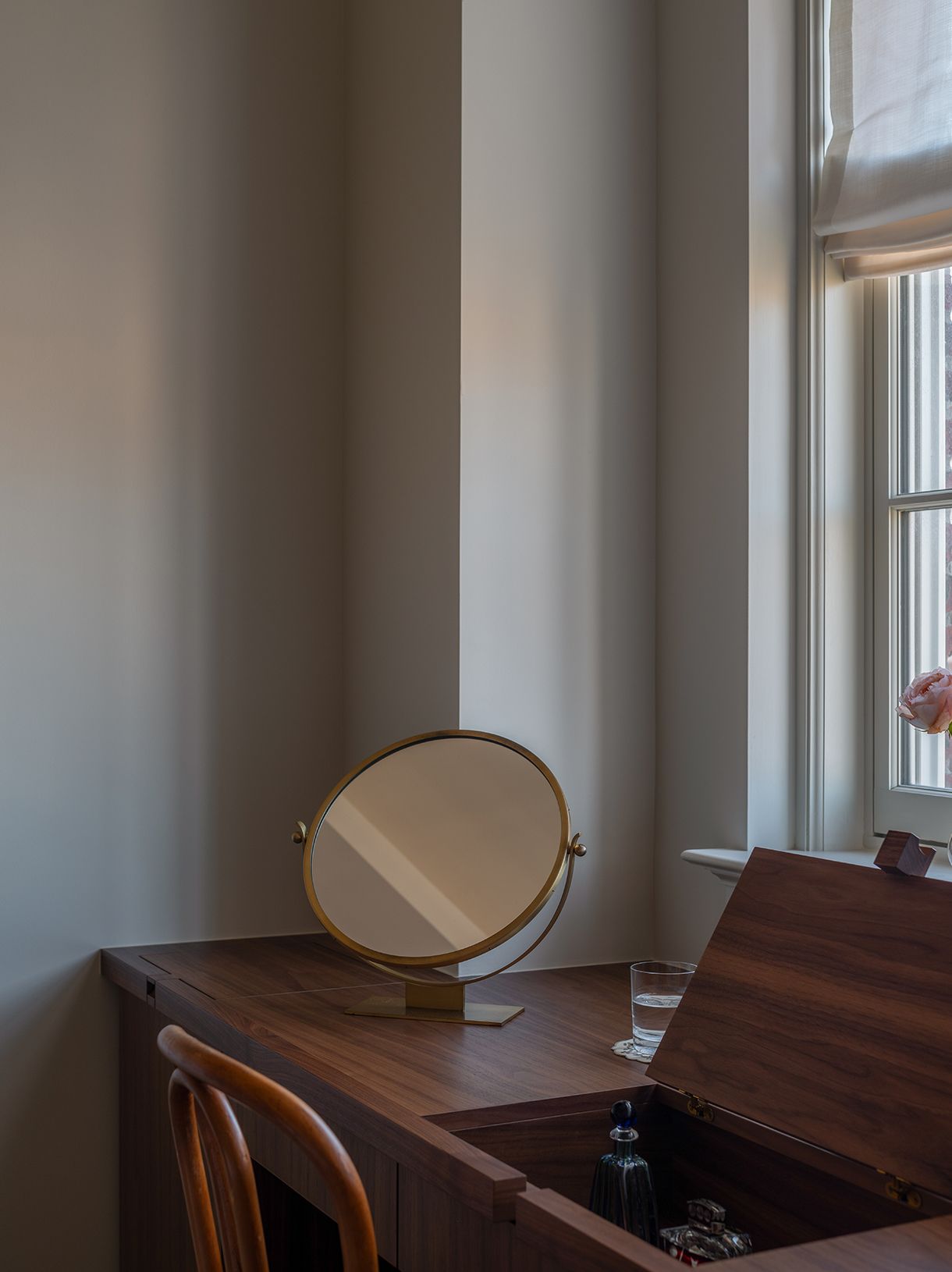
At the seam of the two former apartments, we introduced a walnut-paneled vestibule that establishes both the spatial logic and material vocabulary. The walnut entry opens to living and dining spaces on either side of a central wall with back-to-back fireplaces; private spaces are tucked away at the perimeter. Walnut reappears throughout the apartment as built-in elements—door thresholds, paneling, a hidden bar—that unite the formerly separate spaces.
Every element, from new moldings that echo the building’s 1920s origins to custom dining tables that can join into a 16’ surface for large gatherings, reinforces the residence’s transformation from two halves into one unified home.
Location
Originally Built
Completed
Size
Partner in Charge
Project Team
Interior Design
General Contractor
MEP Engineer
Photographer
Stylist